
If you have ever asked someone in digital marketing “how do I get my website to show up higher on Google,” there is a very good chance the first thing they mentioned was on page SEO. It is one of the most important parts of search engine optimization, and yet many business owners still are not fully sure what it actually means or how to do it correctly.
At PerformX Engine, on page SEO is one of the very first things we check and fix when we start working with a new client, because it forms the foundation that everything else in SEO is built on. In this complete guide, we will explain exactly what is on page SEO, break down every major on page seo factor, and walk through proven on page seo best practices in simple, plain language that anyone can understand and apply.
By the end of this blog, you will fully understand what is on page optimization, why it matters so much, and exactly what steps to take to improve it on your own website.
What Is On-Page SEO?
Let’s start with the simplest possible explanation.
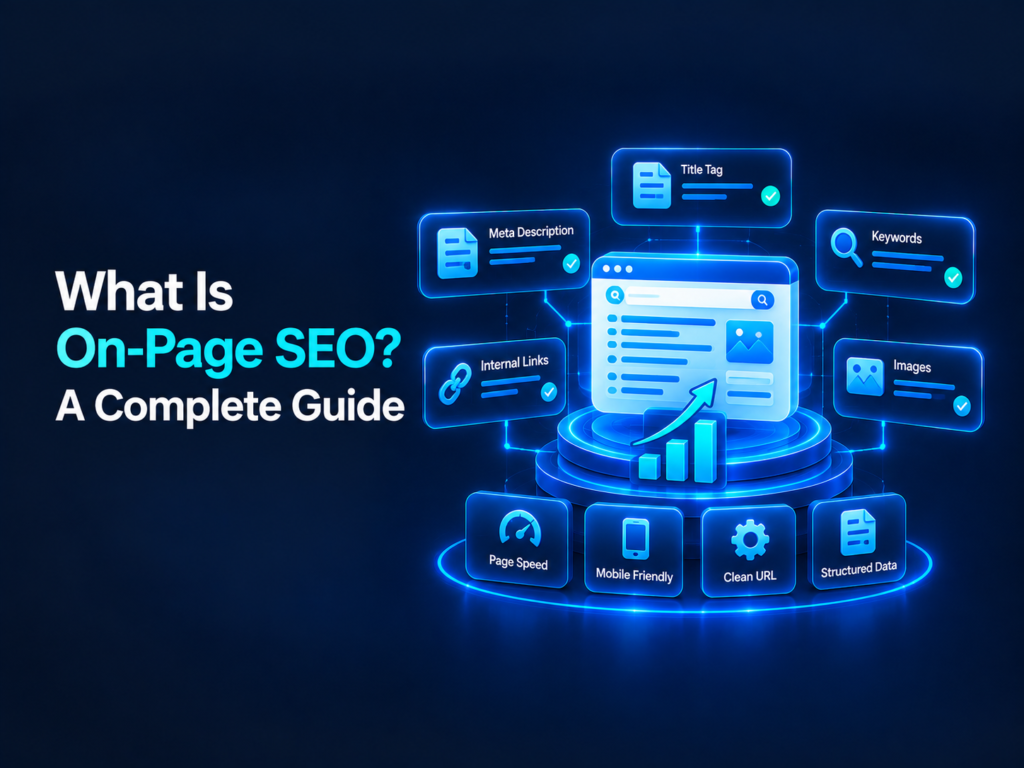
On page SEO refers to everything you do directly on your website’s pages to help them rank higher in search engines and become more useful to visitors. This includes things like your page titles, headings, content, images, internal links, and even how fast your page loads.
Think of it this way: if SEO is like preparing a restaurant to attract more customers, on page SEO is everything happening inside the restaurant itself, the menu, the food quality, the seating, the lighting, and the overall experience. Off page SEO, on the other hand, is more like your restaurant’s reputation outside, like reviews, word of mouth, and recommendations from other people.
So when someone asks what is on page seo in one simple sentence, the answer is this: on page SEO is the practice of optimizing individual web pages so they rank higher and provide a better experience for both search engines and real human visitors.
What Is On-Page Optimization and Why Does It Matter?
On page optimization is really just another name for the same idea, the process of improving the actual content and structure of your web pages to perform better in search results.
It matters because search engines like Google are constantly trying to understand what your page is about and whether it deserves to be shown to people searching for related topics. If your page is confusing, poorly structured, slow, or missing important information, search engines will struggle to understand it, and visitors will struggle to trust it.
Good on page SEO does two things at the same time:
- It helps search engines understand exactly what your page is about
- It helps real visitors find the information they need quickly and easily
When both of these work together, your page has a much stronger chance of ranking well and actually converting visitors into leads or customers.
The Most Important On Page SEO Factors
Now let’s break down every major on page seo factor you need to understand. We will explain each one in simple terms so it is easy to follow and apply.
1. Title Tags
Your title tag is the clickable headline that shows up in Google search results. It is one of the strongest on page seo factors because it tells both search engines and users exactly what your page is about. A good title tag should be clear, include your main keyword naturally, and stay under around 60 characters so it does not get cut off in search results.
2. Meta Descriptions
The meta description is the short summary text that appears underneath your title tag in search results. While it does not directly boost rankings the way title tags do, a well written meta description can significantly improve your click-through rate by convincing more people to click on your result instead of a competitor’s.
3. Heading Structure (H1, H2, H3)
Proper heading structure helps organize your content in a way that is easy to read and easy for search engines to understand. Your page should have one clear H1 heading, usually matching your main topic, followed by H2 and H3 subheadings that break your content into organized, logical sections.
4. Keyword Usage
Using your target keywords naturally throughout your content, including in your headings, introduction, and body text, helps search engines understand exactly what your page is about. The key word here is “naturally.” Stuffing keywords unnaturally into your content can actually hurt your rankings rather than help them.
5. Content Quality and Depth
High quality, in-depth content that genuinely answers the reader’s question is one of the most powerful on page seo factors today. Thin, shallow content that barely covers a topic tends to struggle in search rankings, while thorough, well researched content tends to perform much better over time.
6. URL Structure
Clean, readable URLs that clearly describe the page’s content help both search engines and users understand what to expect before even clicking. A URL like “yourwebsite.com/on-page-seo-guide” is far more effective than a long, confusing string of random numbers and letters.
7. Internal Linking
Internal links connect one page on your website to another relevant page. This helps search engines understand the relationship between your pages, spreads ranking value across your site, and keeps visitors engaged by guiding them to more helpful content.
8. Image Optimization
Images should be compressed for fast loading and include descriptive alt text that explains what the image shows. Alt text also helps visually impaired users understand your content through screen readers, making it both an SEO factor and an accessibility best practice.
9. Page Speed
Slow loading pages frustrate visitors and can hurt your search rankings. Optimizing image sizes, reducing unnecessary code, and using reliable hosting are all important steps in keeping your page speed fast and your bounce rate low.
10. Mobile Friendliness
With most searches now happening on mobile devices, having a website that displays and functions properly on phones and tablets is no longer optional. Google primarily uses the mobile version of your site to determine rankings, making mobile friendliness one of the most essential on page seo factors today.
11. User Experience (UX)
A page that is easy to navigate, visually clear, and free of intrusive pop-ups or clutter tends to keep visitors engaged longer. Search engines pay close attention to how users interact with your page, so a strong user experience directly supports stronger on page SEO performance.
12. Schema Markup
Schema markup is a type of structured data added to your page’s code that helps search engines understand your content more precisely. It can also help your page qualify for enhanced search features, like star ratings, FAQ dropdowns, or product details shown directly in search results.
On Page SEO Best Practices You Should Follow
Understanding the factors above is important, but knowing how to actually apply them correctly is where real results come from. Here are proven on page seo best practices we follow at PerformXEngine with every client.
1. Write for Humans First, Search Engines Second
Your content should always be genuinely helpful and easy to read for real people. Search engines are constantly getting better at rewarding content that truly satisfies the reader, not just content that technically follows SEO rules.
2. Target One Clear Topic Per Page
Avoid trying to rank one single page for too many unrelated keywords. Instead, focus each page around one clear topic or question, and let related keywords naturally support that main focus.
3. Use Your Keyword in the Right Places
Include your main keyword naturally in your title tag, your H1 heading, your introduction, and a few times throughout your content. Avoid forcing it in unnaturally, since this can hurt readability and even trigger search engine penalties.
4. Keep Paragraphs and Sentences Short
Large blocks of text can overwhelm readers, especially on mobile devices. Short paragraphs, simple sentences, and clear formatting make your content far easier to read and understand.
5. Add a Clear FAQ Section
FAQ sections not only help answer common reader questions directly, they also improve your chances of getting featured in Google’s AI Overviews and featured snippets, since they are already formatted in a clean question and answer style.
6. Optimize Every Image
Compress your images before uploading them, and always add clear, descriptive alt text. This small step supports both page speed and accessibility, two important pieces of the on page SEO puzzle.
7. Build a Strong Internal Linking Structure
Link naturally to other relevant pages on your website whenever it makes sense. This helps visitors explore more of your content while also helping search engines better understand your site’s overall structure.
8. Regularly Update Older Content
Search engines favor content that stays accurate and relevant over time. Revisiting older pages to update outdated information, add new insights, and improve overall quality is one of the most overlooked on page SEO best practices.
Common On-Page SEO Mistakes to Avoid
- Keyword stuffing. Repeating your keyword unnaturally throughout the page can hurt readability and search rankings alike.
- Duplicate title tags and meta descriptions. Every page should have its own unique, descriptive title and meta description.
- Ignoring mobile users. A page that looks great on desktop but breaks on mobile devices will struggle in today’s search results.
- Thin, shallow content. Pages that barely cover a topic rarely perform well against more detailed, thorough competitors.
- Slow page speed. Even great content will struggle to perform if visitors leave before the page finishes loading.
- Missing or messy heading structure. Pages without clear headings are harder for both readers and search engines to understand.
How On-Page SEO Connects to Overall SEO Success
It is important to understand that on page SEO does not work alone. It works alongside off page SEO, like backlinks and brand mentions, and technical SEO, like site speed and crawlability, to create a complete, well rounded SEO strategy.
However, on page SEO is usually the best place to start, because it is entirely within your control. You do not need to wait for other websites to link to you or for external factors to improve. You can directly improve your titles, your content, your structure, and your user experience today, which makes on page optimization one of the fastest and most reliable ways to start improving your search visibility.
Why Professional On-Page SEO Support Matters
While the basics of on page SEO are simple to understand, applying them correctly and consistently across an entire website takes real time, strategy, and experience. This is exactly the kind of work our SEO team handles every day at PerformXEngine.
We audit every important on page seo factor for our clients, from title tags and content quality to internal linking and page speed, and build a clear improvement plan based on real data, not guesswork. Our goal is always the same: help your website become genuinely more useful to visitors while also becoming easier for search engines to understand and rank.
Final Thoughts
On page SEO is one of the most powerful and controllable parts of your entire SEO strategy. By focusing on the right on page seo factors, like clear titles, strong content, proper heading structure, and a smooth user experience, you give your website a real chance to rank higher and genuinely help the people who find it.
At PerformX Engine, we help businesses build strong, well optimized websites that perform well for both search engines and real visitors. If you are ready to improve your website’s on page SEO and start seeing real results, our team is here to help.
Ready to strengthen your website’s on page SEO? Reach out to PerformXEngine today and let’s build a stronger, more visible website together.
Frequently Asked Questions About On-Page SEO
What is on page SEO in simple words?
On page SEO is the process of optimizing the content and structure of your individual web pages, like titles, headings, and content quality, to help them rank higher in search results and serve visitors better.
What is on page optimization exactly?
On page optimization is another term for the same process, improving elements directly on your website’s pages, such as keywords, content, images, and internal links, to improve both search rankings and user experience.
What are the most important on page seo factors?
Some of the most important factors include title tags, heading structure, content quality, page speed, mobile friendliness, internal linking, and proper keyword usage.
How is on page SEO different from off page SEO?
On page SEO focuses on elements you control directly on your website, while off page SEO focuses on external factors, like backlinks and brand mentions from other websites.
How long does it take to see results from on page SEO best practices?
Results can vary depending on your website’s current state and competition, but many businesses start noticing gradual improvements within a few weeks to a few months of consistently applying on page SEO best practices.