
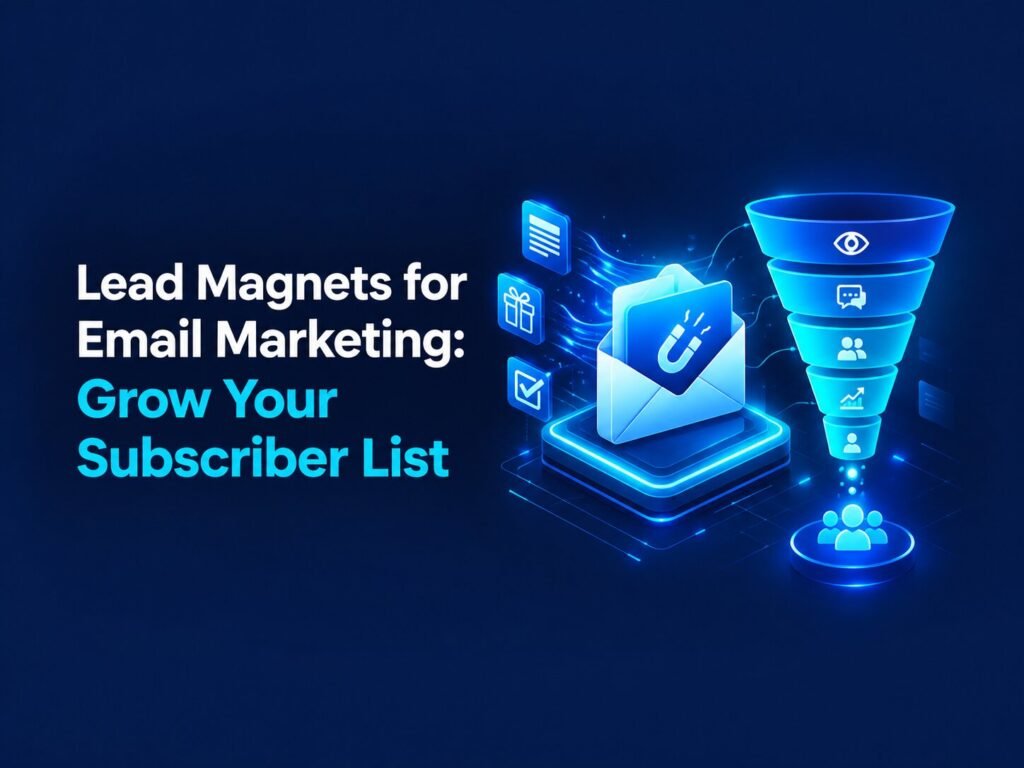
Nobody hands over their email address for nothing. In a world where inboxes are already overflowing, asking someone to simply “sign up for our newsletter” rarely works anymore. That’s why lead magnets have become a core part of any serious email marketing strategy, and why knowing how to build them properly is such a valuable skill for marketers today.
At PerformX Engine, we assess list growth strategy first when building an email marketing plan for a client, because even the best email campaigns are limited by the size and quality of the list they are sent to. In this guide, we will explain everything about lead magnets for email marketing in clear, practical language. We will cover what is a lead magnet, walk through proven lead magnet ideas across different industries, and give you a repeatable process for how to create a lead magnet that actually converts.
What Is a Lead Magnet?
Let’s start with a clear definition.
A lead magnet is a piece of valuable content or an offer that a business gives away for free in exchange for a visitor’s contact information, most commonly their email address. Instead of asking someone to subscribe with nothing in return, a lead magnet gives them an immediate, tangible reason to say yes.
In simple words, if someone asks what is a lead magnet, the answer is this: it is a specific, valuable resource, sometimes called an email magnet, offered in exchange for someone joining your list, designed to solve a small but real problem for your target audience right away.
The core idea behind every effective lead magnet is a simple value exchange. The visitor gives up something they consider mildly private, their email address, in exchange for something they consider genuinely useful. When that exchange feels fair and worthwhile, conversion rates on your opt-in forms improve significantly.
Why Lead Magnets Matter So Much for Email Marketing
Email marketing performance starts long before a single campaign is sent. It starts with the quality and size of your list, and that is exactly where lead magnets come in.
Here is why lead magnets deserve serious strategic attention:
- They accelerate list growth. A compelling lead magnet consistently outperforms a plain “subscribe to our newsletter” form.
- They attract more qualified subscribers. A well targeted lead magnet naturally filters for people genuinely interested in your specific topic or offer.
- They build trust from the very first interaction. Delivering real value upfront sets a positive tone for the entire relationship that follows.
- They support segmentation. Different lead magnets can be used to identify different audience segments right from the moment someone joins your list.
- They improve overall funnel performance. A strong lead magnet strategy feeds directly into nurture sequences, product launches, and long-term customer relationships.
Types of Lead Magnets That Work Well
Not every lead magnet performs equally well across every industry or audience. Understanding the different categories available helps you choose the right format for your specific goals.
Educational Lead Magnets
These resources teach the audience something valuable, positioning your business as a knowledgeable authority. Examples include guides, checklists, and how-to resources.
Tool-Based Lead Magnets
These offer something interactive or usable, like a calculator, template, or planner, giving the visitor something they can immediately apply to their own situation.
Discount and Incentive Lead Magnets
Common in ecommerce, these offer a direct financial incentive, like a percentage off a first purchase, in exchange for an email address.
Exclusive Access Lead Magnets
These offer something the audience cannot get elsewhere, like early access to a product launch, a private community, or an exclusive webinar.
Proven Lead Magnet Ideas by Category
Let’s walk through specific lead magnet ideas you can adapt for your own business or your clients’ businesses.
1. Checklists and Cheat Sheets
Simple, easy to consume, and highly actionable, checklists work well because they promise a quick, tangible outcome without requiring much time investment from the reader.
2. Ebooks and Guides
A more in-depth resource that dives deeper into a specific topic. Ebooks work especially well for topics that require more explanation than a checklist alone can offer.
3. Templates
Templates, like email templates, content calendars, or planning worksheets, are popular because they save the recipient real time and effort, which people consistently value highly.
4. Free Tools and Calculators
Interactive tools, like a budget calculator, an ROI estimator, or an audit tool, tend to perform extremely well because they deliver personalized value instantly, based on the user’s own input.
5. Webinars and Free Workshops
These work well for topics that benefit from deeper explanation or demonstration, and they also allow for stronger relationship building through live interaction.
6. Quizzes and Assessments
Quizzes offer a personalized result in exchange for an email address, which tends to feel highly relevant and engaging to the person completing it.
7. Free Trials or Samples
Especially common for software or subscription-based businesses, offering a limited free trial allows potential customers to experience real value before fully committing.
8. Resource Libraries or Swipe Files
A curated collection of resources, examples, or templates around a specific topic can feel like a genuinely valuable shortcut for a busy audience.
9. Discount Codes
Particularly effective for ecommerce, a simple percentage-off incentive remains one of the most consistently high-converting lead magnet ideas available.
10. Exclusive Reports or Industry Data
Original research, survey results, or industry benchmark reports can position your business as a credible authority while offering genuinely unique value that competitors cannot easily replicate.
How to Create a Lead Magnet That Actually Converts
Understanding lead magnet ideas is only half the equation. Knowing how to create a lead magnet that genuinely converts requires a clear, deliberate process.
Step 1: Understand Your Audience’s Specific Pain Point
Start by identifying a real, specific problem your target audience is actively trying to solve. The more precisely your lead magnet addresses that exact problem, the more compelling it will feel.
Step 2: Promise One Clear, Specific Outcome
Effective lead magnets are narrow and focused, not broad and vague. Instead of “Marketing Tips,” a title like “5 Email Subject Lines That Increased Open Rates by 20 Percent” promises something specific and immediately valuable.
Step 3: Make It Quick to Consume
The best lead magnets deliver value fast. A checklist someone can use in five minutes often outperforms a lengthy ebook that requires a significant time commitment, unless your audience specifically expects and values deeper content.
Step 4: Design It Professionally
Even simple lead magnets benefit from clean, professional design. A poorly formatted PDF can undermine the perceived value of even genuinely useful content.
Step 5: Create a Dedicated Landing Page
Your lead magnet deserves its own focused landing page, with clear messaging about exactly what the visitor will receive and why it matters, rather than being buried within a general page.
Step 6: Write a Clear, Compelling Opt-In Form
Keep your opt-in form simple, usually just asking for a name and email address, and use clear, benefit focused copy that reinforces exactly what the visitor is about to receive.
Step 7: Deliver Value Immediately
Once someone submits their information, deliver the lead magnet right away, either through an instant download or a prompt confirmation email. Delayed or confusing delivery can quickly damage the trust you just built.
Step 8: Follow Up With a Thoughtful Welcome Sequence
The lead magnet itself is just the beginning. A well planned welcome email sequence helps nurture that new subscriber relationship, reinforcing the value they just received and guiding them toward your broader offers.
Where to Promote Your Lead Magnet
Creating a strong lead magnet is only valuable if the right people actually see it. Consider promoting it through:
- Blog posts related to the lead magnet’s specific topic
- Pop-up or slide-in forms on high-traffic website pages
- Dedicated social media posts and pinned content
- Paid social or search campaigns targeting your ideal audience
- Guest posts or partnerships with complementary businesses
Common Lead Magnet Mistakes to Avoid
- Being too broad or generic. A vague lead magnet fails to communicate specific, compelling value.
- Overpromising and underdelivering. If the actual content does not match the promise made on the landing page, trust is damaged immediately.
- Making the opt-in process too complicated. Long forms with too many required fields often reduce conversion rates significantly.
- Neglecting the follow-up sequence. A strong lead magnet without a thoughtful nurture sequence wastes much of its long-term potential.
- Never testing or updating the offer. Lead magnets can lose relevance over time, so testing new ideas and refreshing older ones regularly helps maintain strong conversion rates.
How to Measure Lead Magnet Performance
To understand whether a lead magnet is genuinely working, track metrics like landing page conversion rate, cost per lead if promoted through paid channels, and, most importantly, how those subscribers behave further down the funnel. A lead magnet that generates a large volume of subscribers who never engage or convert is far less valuable than one that generates fewer, but more qualified and engaged, subscribers.
Why Professional Support Makes a Real Difference
While the basic concept behind lead magnets is simple, building a strategy that consistently attracts the right subscribers, and nurtures them effectively afterward, takes real research, testing, and ongoing refinement. This is exactly the kind of work our team focuses on every day at PerformXEngine.
We help businesses identify the right lead magnet ideas for their specific audience, build high-converting landing pages, and design thoughtful follow-up sequences that turn new subscribers into genuine, long-term customers.
Matching Lead Magnet Ideas to Your Business Type
The most effective lead magnet ideas often vary significantly depending on the type of business using them. Here is a practical breakdown worth considering.
For Ecommerce Businesses
Discount codes, early access to sales, and free shipping offers tend to perform especially well, since they directly connect to the purchase decision the visitor is already close to making.
For B2B and Service Businesses
Templates, checklists, and industry reports tend to work best, since B2B buyers are often researching solutions to specific operational problems and value resources that save time or demonstrate real expertise.
For Coaches, Consultants, and Course Creators
Quizzes, mini-workshops, and free assessments tend to perform strongly, since they allow the audience to receive a personalized result while also experiencing the creator’s teaching style firsthand.
For Local Businesses
Simple, practical incentives, like a downloadable local guide, a free consultation, or a small discount, often work better than more elaborate content formats, since local audiences typically want fast, tangible value tied directly to the business itself.
Matching your lead magnet format to your specific business type, rather than copying a generic template, significantly improves the odds that your offer will feel genuinely relevant to the people you are trying to attract.
Final Thoughts
Understanding what is a lead magnet, and applying a clear, deliberate process for how to create a lead magnet, gives your email marketing strategy a genuinely strong foundation to build on. The right lead magnet ideas, paired with a well designed landing page and a thoughtful follow-up sequence, can significantly accelerate your subscriber growth while attracting the kind of engaged, qualified audience that actually drives real business results.
At PerformX Engine, we help businesses design and implement effective lead magnet strategies that grow email lists with subscribers who genuinely convert. If you are ready to build a stronger, more strategic approach to list growth, our team is here to help.
Ready to grow your email list with lead magnets that actually convert? Reach out to PerformX Engine today and let’s build your list growth strategy together.
Frequently Asked Questions About Lead Magnets
What is a lead magnet in simple words?
A lead magnet is a valuable piece of content or offer given away for free in exchange for a visitor’s contact information, usually their email address, designed to grow an email list with genuinely interested subscribers.
What are some effective lead magnet ideas for beginners?
Simple, quick to consume formats like checklists, templates, and discount codes are often the easiest and most effective lead magnet ideas for businesses just starting to build their email list.
How to create a lead magnet that actually gets sign-ups?
Focus on solving one specific, clearly defined problem for your audience, promise a fast, tangible outcome, and pair it with a dedicated, well designed landing page and a simple opt-in form.
How many lead magnets should a business have?
There is no fixed number, but many successful businesses use several lead magnets targeted at different audience segments or different stages of the customer journey, rather than relying on just one generic offer.
Do lead magnets still work well for email marketing today?
Yes, lead magnets remain one of the most effective ways to grow an engaged email list, especially when the offer is specific, genuinely valuable, and clearly communicated.