
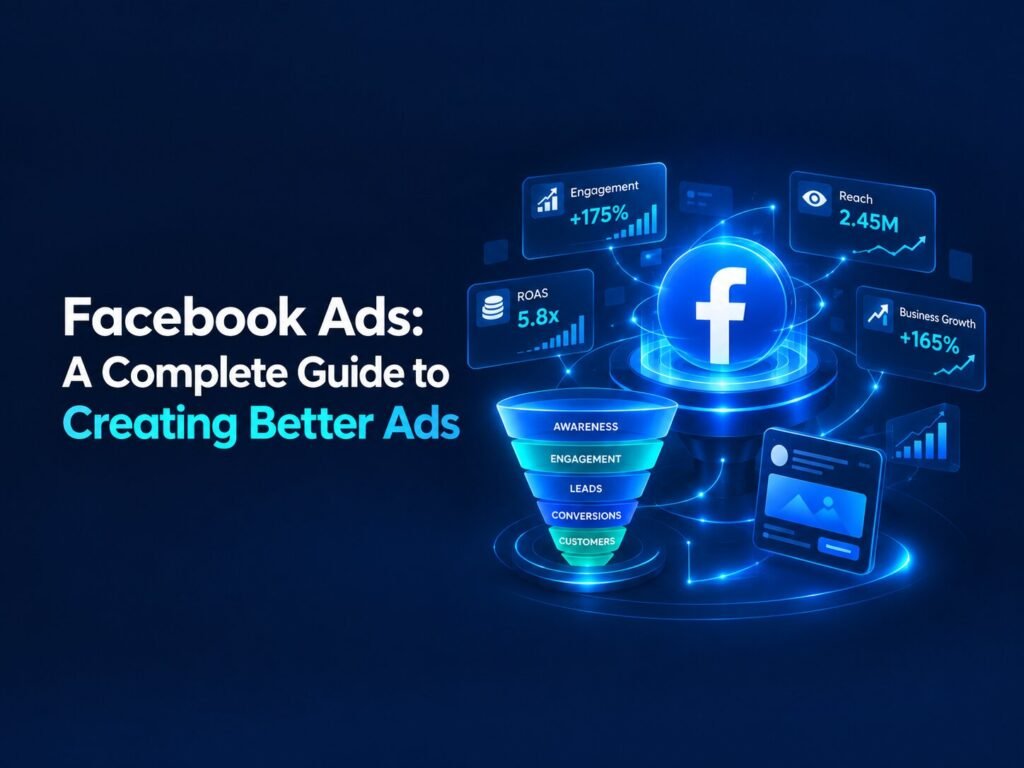
Facebook has over a billion people scrolling through it every single day, and a huge number of them are actively browsing, shopping, and discovering new businesses right inside their feed. That is exactly why Facebook Ads remain one of the most powerful tools available for businesses today, no matter how big or small.
At PerformX Engine, we build and manage Facebook advertising campaigns for businesses across many different industries, and we have seen firsthand how the right strategy can turn a small budget into real, measurable growth. This facebook ads guide is designed to walk you through everything you need to know, from the very basics all the way to advanced tips that most beginners never learn.
Whether you are creating your very first Facebook ad or trying to improve campaigns that are not performing the way you hoped, this complete facebook ads guide will help you understand exactly how to create better, smarter, more effective ads.
What Are Facebook Ads?
Facebook Ads are paid advertisements that appear across Facebook and its connected platforms, including Instagram, Messenger, and the Facebook Audience Network. Unlike organic posts, which only reach a portion of your followers, Facebook Ads let you pay to show your content directly to specific groups of people, based on their interests, behaviors, location, age, and much more.
Businesses use Facebook Ads for many different goals, including building brand awareness, driving website traffic, generating leads, and increasing direct sales. Because Facebook collects so much information about its users, advertisers can target their ads with impressive precision, reaching exactly the kind of people most likely to care about what they offer.
Why Facebook Ads Still Matter for Businesses Today
Some people assume Facebook has become “outdated” compared to newer platforms, but the numbers tell a very different story. Facebook and Instagram together still reach billions of active users, spanning nearly every age group and interest. For most businesses, this means your ideal customers are almost certainly somewhere inside that massive audience.
Facebook Ads also offer something many other advertising platforms cannot match as easily: flexible budgets. You can start with a very small daily budget and scale up gradually as you learn what works, making it accessible for businesses of nearly any size.
Understanding Facebook Ads Campaign Structure
Before diving into creating your first ad, it helps to understand how Facebook organizes its advertising system. Every Facebook advertising account is built around three levels.
1. Campaign Level
This is where you choose your overall objective, such as awareness, traffic, engagement, leads, app promotion, or sales. Everything below this level works toward that one main goal.
2. Ad Set Level
Inside each campaign, you create ad sets, where you define your target audience, budget, schedule, and placements, meaning where your ads will actually appear across Facebook, Instagram, and other connected platforms.
3. Ad Level
This is where the actual creative lives, meaning your images, videos, headlines, descriptions, and call to action buttons that people will actually see in their feed.
Understanding this three-level structure is one of the most important first steps in any solid facebook ads guide, because it shapes how your entire campaign is organized and optimized.
Choosing the Right Campaign Objective
Facebook asks you to choose a campaign objective before you build anything else, and this decision matters a lot. Your objective tells Facebook’s algorithm exactly what kind of result to optimize for.
Common objectives include:
- Awareness: Best for introducing your brand to new audiences who may not know you yet.
- Traffic: Best for driving visitors to your website or landing page.
- Engagement: Best for getting likes, comments, shares, or video views.
- Leads: Best for collecting contact information through lead forms or landing pages.
- App Promotion: Best for encouraging app installs or in-app actions.
- Sales: Best for driving purchases, especially for ecommerce businesses.
Choosing the wrong objective is one of the most common mistakes beginners make. If your real goal is generating sales, but you choose an “engagement” objective, Facebook will optimize for likes and comments instead of purchases, which usually leads to disappointing results.
Understanding Facebook Ads Targeting
One of the biggest strengths of Facebook advertising is its targeting system. Instead of showing your ad to everyone, you can choose exactly who sees it based on detailed criteria.
Core Audiences
This is the most basic targeting option, where you manually select details like age, gender, location, interests, and behaviors to define who should see your ad.
Custom Audiences
Custom Audiences let you target people who have already interacted with your business, such as website visitors, email subscribers, or past customers. This is often one of the highest performing audience types, since these people already know your brand.
Lookalike Audiences
Lookalike Audiences let Facebook find new people who share similar characteristics to your best existing customers. This is a powerful way to expand your reach while still targeting people likely to be genuinely interested in your business.
Facebook Ad Formats Explained
Understanding the different ad formats available helps you choose the right approach for your specific goals.
Image Ads
Simple, single image ads work well for clear, direct messages and are quick to create and test.
Video Ads
Video ads tend to capture more attention in the feed and can tell a fuller story, making them great for demonstrations, testimonials, or brand storytelling.
Carousel Ads
Carousel ads allow you to display multiple images or products in one ad, which people can swipe through, making this format especially useful for ecommerce businesses.
Collection Ads
Collection ads combine a main video or image with smaller product images below it, creating an interactive, catalog-style browsing experience directly inside the ad.
Stories and Reels Ads
These full-screen, vertical ads appear between organic Stories and Reels content, blending naturally into the casual, fast-scrolling browsing experience most people are already used to.
How Facebook Ads Budgeting Works
Facebook lets you choose between two main budget types.
Daily Budget
This sets the average amount you are willing to spend per day. Facebook may spend slightly more on some days and less on others, but it will average out to your set daily amount over time.
Lifetime Budget
This sets a total amount you are willing to spend across the entire duration of your campaign, and Facebook will manage the pacing across the campaign’s set start and end dates.
For beginners, starting with a modest daily budget and gradually increasing it as you learn what performs well is usually a smarter, safer approach than committing a large lifetime budget right away.
How to Create a High-Performing Facebook Ad
Now let’s walk through the practical steps of actually building an ad that performs well.
Step 1: Define a Clear Goal
Before creating anything, decide exactly what you want this specific ad to achieve, whether that is generating leads, driving sales, or building awareness. This decision shapes every choice that follows.
Step 2: Know Your Audience
Understand who you are trying to reach. What do they care about? What problems are they trying to solve? The more clearly you understand your audience, the more effective your targeting and creative will be.
Step 3: Create a Scroll-Stopping Visual
Your image or video needs to grab attention within the first second or two, since people scroll through their feeds quickly. Bright, clear, simple visuals almost always outperform busy, cluttered designs.
Step 4: Write Clear, Benefit-Focused Copy
Focus your ad copy on the benefit to the viewer, not just the features of your product or service. Keep your message simple, direct, and easy to understand at a glance.
Step 5: Add a Strong Call to Action
Make it obvious what you want the viewer to do next, whether that is “Shop Now,” “Learn More,” or “Sign Up Today.” A clear call to action removes confusion and encourages action.
Step 6: Test Multiple Variations
Create several versions of your ad with different images, headlines, and messages, then let the data show you which version actually performs best, rather than guessing.
Step 7: Monitor and Optimize
Once your ad is live, track its performance closely. Pause underperforming ads, scale up the ones that are working, and continue refining your approach based on real results.
Facebook Ads Best Practices for Better Performance
- Design for sound off. Most people scroll with their sound muted, so always include captions or on-screen text in video ads.
- Keep messaging simple. One clear idea per ad performs better than trying to communicate too many things at once.
- Refresh your creative regularly. Ads shown to the same audience too often eventually lose effectiveness, a problem known as ad fatigue.
- Use authentic, native-looking content. Ads that feel natural within the feed tend to outperform overly polished, corporate looking visuals.
- Match your ad format to the placement. Vertical video works best for Stories and Reels, while square or landscape formats often perform better in the main feed.
Common Facebook Ads Mistakes to Avoid
- Targeting too broad an audience. This often leads to wasted spend on people who are unlikely to care about your offer.
- Ignoring mobile design. Most Facebook users browse on mobile devices, so ads must look and function well on smaller screens.
- Running only one ad creative. Without testing multiple variations, you may never discover your actual best-performing option.
- Sending traffic to a weak landing page. Even a great ad will struggle to convert if the page it links to is slow, confusing, or unrelated to the ad’s message.
- Setting and forgetting campaigns. Facebook Ads require ongoing monitoring and adjustment to keep performing well over time.
How to Measure Facebook Ads Success
Tracking the right metrics helps you understand whether your campaigns are actually working. Some of the most important metrics to watch include:
- Click-through rate (CTR): How often people click your ad after seeing it.
- Cost per click (CPC): How much you are paying, on average, for each click.
- Conversion rate: The percentage of people who take your desired action after clicking.
- Return on ad spend (ROAS): How much revenue you are generating compared to how much you are spending on ads.
- Frequency: How often the same person is seeing your ad, which helps you monitor and avoid ad fatigue.
Regularly reviewing these numbers helps you understand what is genuinely working, rather than relying on assumptions or guesswork.
Why Professional Support Makes a Real Difference
While the basics of Facebook advertising are simple to learn, building consistently profitable campaigns takes ongoing testing, creative development, and careful budget management. This is exactly the kind of work our paid media team focuses on every day at PerformXEngine.
We help businesses build complete Facebook advertising strategies, from audience research and creative development to ongoing optimization and reporting, so every dollar of ad spend is working as hard as possible toward real business results.
Final Thoughts
Creating better Facebook Ads is not about having the biggest budget or the fanciest production quality. It is about understanding your audience, choosing the right objective, crafting a clear and attention-grabbing message, and continuously testing and refining your approach based on real data. This facebook ads guide has walked through every major piece of that process, from campaign structure to targeting to measuring success.
At PerformX Engine, we help businesses build Facebook advertising strategies that actually deliver real results, not just impressions. If you are ready to create ads that genuinely perform, our team is here to help.
Ready to build Facebook Ads that actually work? Reach out to PerformXEngine today and let’s create a strategy that grows your business.
Frequently Asked Questions About Facebook Ads
How much do Facebook Ads cost?
Facebook Ads work on a flexible budget system, meaning you can start with a small daily budget and scale up as you see results. Actual costs vary based on your industry, targeting, and competition.
What is the best Facebook ad format for beginners?
Simple image ads and short video ads are usually the easiest formats for beginners to create and test, before expanding into carousel or collection ads as you gain more experience.
How long does it take to see results from Facebook Ads?
Many campaigns need at least a week or two to gather enough data for Facebook’s system to optimize properly, so it is important to avoid judging performance too early.
Do I need a large budget to run successful Facebook Ads?
No, many small businesses see meaningful results with modest daily budgets, especially when combined with clear targeting and strong, well-tested creative.
What is the biggest mistake beginners make with Facebook Ads?
One of the most common mistakes is targeting too broad an audience or choosing the wrong campaign objective, both of which can lead to wasted ad spend and disappointing results.