
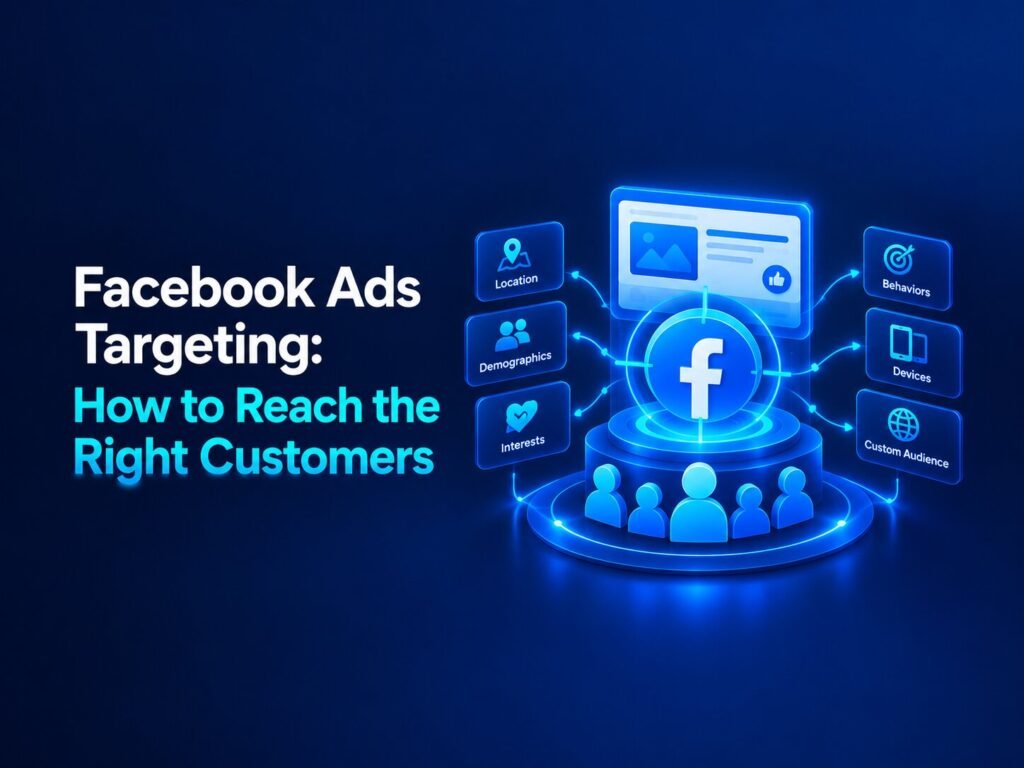
Imagine you are shouting an offer in the middle of a huge, noisy stadium filled with a hundred thousand people. Only a few hundred of them actually want what you are selling. That is what advertising without a plan feels like. Now imagine you could tap only those few hundred people on the shoulder and speak directly to them. That is exactly what good Facebook ad targeting does for your business.
Facebook has billions of active users, but not all of them are your customers. The real skill in running successful campaigns is not spending more money. It is knowing exactly who to show your ad to. In this guide, we will explain everything about Facebook ads audience targeting, the different Facebook ads targeting options, and simple, step by step tips on how to target Facebook ads the right way, even if you are a complete beginner.
At Perform X Engine, we manage paid social campaigns for businesses every day, and targeting is the single biggest factor that decides whether a campaign wins or wastes money. Let’s break it all down in plain, simple language.
What Is Facebook Ad Targeting?
Facebook ad targeting is the process of choosing exactly who should see your ads. Instead of showing your ad to everyone on the platform, you choose people based on things like their location, age, interests, past behavior, and even how similar they are to your current customers.
Think of it like fishing. You would not throw your net into a random pond and hope for the best fish. You would choose a pond that already has the type of fish you want. Facebook targeting works the same way. It helps you place your ad in front of the right “pond” of people who are most likely to become your customers.
This is why understanding facebook ad targeting is one of the most important skills in digital marketing today. Without it, even the most creative ad will fail to bring real results.
Why Facebook Ads Audience Targeting Matters So Much
Good facebook ads audience targeting is the difference between an ad that gets ignored and an ad that gets clicks, leads, and sales. Here is why it matters so much:
1. It saves your ad budget. When your ad is shown only to people who are actually interested, you spend less money reaching people who would never buy from you.
2. It improves your results. Ads shown to the right audience naturally get more clicks, more engagement, and more conversions.
3. It builds a better relationship with customers. When people see ads that feel relevant to them, they trust the brand more instead of feeling annoyed by random ads.
4. It helps Facebook’s algorithm learn faster. The clearer your targeting signals, the faster Facebook can find more people who behave like your best customers.
5. It gives you an advantage over competitors. Many businesses still run broad, untargeted campaigns. Businesses that master audience targeting almost always outperform them.
In short, if you want your ad spend to actually turn into sales, learning proper targeting is not optional. It is the foundation of every successful campaign.
The Main Facebook Ads Targeting Options
Now let’s go through the core Facebook ads targeting options available inside Ads Manager. Facebook mainly offers three types of audiences, plus one powerful AI based option.
1. Saved Audiences (Core Targeting)
Saved audiences let you build an audience from scratch using details like:
- Location (country, city, or a radius around an address)
- Age and gender
- Interests and hobbies (fitness, travel, technology, and so on)
- Behaviors (recent purchases, device usage, travel habits)
- Connections (people who already follow your Facebook page)
This is usually the starting point for new advertisers, especially when you do not yet have existing customer data to work with. It is one of the simplest ways to start targeting for Facebook ads because you build the audience manually based on who you believe your ideal customer is.
2. Custom Audiences
Custom audiences let you target people who already know your brand. This could include:
- People who visited your website
- Your email subscriber list
- People who used your mobile app
- Past customers from your sales records
This is one of the most powerful Facebook ads targeting options because these people already have some familiarity with your brand. Showing them a follow up ad, a discount, or a reminder often leads to strong conversion rates, since you are not starting from zero trust.
3. Lookalike Audiences
Lookalike audiences allow Facebook to study your best existing customers and then find brand new people who share similar traits and behaviors. You simply give Facebook a source audience, such as your email list or website visitors, and Facebook builds a fresh audience of strangers who “look like” them.
This targeting option is extremely useful when you want to grow beyond your current audience while still keeping the quality of your leads high.
4. Meta Advantage+ (AI Powered Targeting)
Meta Advantage+ is Facebook’s AI driven targeting system. Instead of manually selecting age, interests, or location, you give Facebook basic information and let its machine learning system automatically find the people most likely to convert.
This has become extremely popular because it often performs better than manual targeting, especially for ecommerce brands, since Facebook’s AI can process far more data signals than a human ever could.
How Do You Target Facebook Ads? Step by Step
If you are asking how do you target Facebook ads for the first time, here is a simple step by step process anyone can follow.
Step 1: Define your goal
Are you trying to build brand awareness, get website traffic, generate leads, or drive direct sales? Your goal changes which targeting option makes the most sense.
Step 2: Choose your audience type
If you are new and have no existing data, start with saved audiences. If you have website traffic or a customer list, use custom audiences. If you want to grow, add lookalike audiences.
Step 3: Set your location and demographics
Choose the countries, cities, age range, and gender that best match your ideal customer.
Step 4: Add interests and behaviors
Add relevant interests, but avoid stacking too many unrelated ones together, since this can confuse the algorithm and shrink your results.
Step 5: Use exclusions
Exclude people who already purchased or already engaged deeply, so you are not wasting budget showing the same ad to people who do not need it anymore.
Step 6: Test your audience
Never rely on a single audience. Run two or three different audience versions and compare which one performs best.
Step 7: Let Facebook optimize
Once your ad is live, give it a few days without major changes so Facebook’s algorithm has enough time to learn and optimize delivery.
Following these steps consistently is the simplest way to understand how to target Facebook ads correctly, even without years of experience.
Advanced Targeting for Facebook Ads
Once you are comfortable with the basics, you can move on to more advanced targeting for Facebook ads that experienced marketers use to get even better results.
Layered Targeting
Instead of targeting broad interests alone, combine multiple signals together. For example, instead of just targeting “fitness,” you could target women aged 25 to 40, interested in fitness, who also recently engaged with online shopping behavior. This creates a much more specific and relevant audience.
Sequential Retargeting
Show a series of ads in a planned order to the same audience. For example, first show an educational ad, then a testimonial ad, and finally a discount offer. This gently guides potential customers through the buying journey instead of asking for a sale too early.
Exclusion Targeting
Just like negative keywords in search ads, exclusions remove people you do not want to target, such as existing customers or people who already converted. This keeps your budget focused only on new opportunities.
Value Based Lookalike Audiences
Instead of creating a lookalike audience from all customers, create it from your highest spending customers only. This often results in a smaller but much higher quality audience.
Common Facebook Ad Targeting Mistakes to Avoid
Many businesses waste money because of small targeting mistakes. Avoid these common issues:
- Making your audience too small, which limits Facebook’s ability to find results
- Making your audience too broad, which wastes budget on people who are not interested
- Stacking too many unrelated interests together
- Never testing more than one audience
- Ignoring exclusion audiences, showing ads to people who already converted
- Not updating audiences regularly as your business and customers evolve
- Ignoring Meta Advantage+ testing, even though it often performs better with less manual work
Avoiding these simple mistakes alone can dramatically improve your ad performance and lower your cost per result.
Facebook Ads Targeting Options Comparison Table
| Targeting Option | Best For | Data Needed | Example Use Case |
| Saved Audiences | New businesses, brand awareness | None required | Local bakery targeting nearby food lovers |
| Custom Audiences | Retargeting warm leads | Website visitors, email list | Reminding cart abandoners to complete purchase |
| Lookalike Audiences | Scaling and growth | Existing customer data | Finding new customers similar to top buyers |
| Meta Advantage+ | Automated, AI driven targeting | Basic campaign data | Ecommerce brand scaling sales efficiently |
Facebook Ad Targeting and Data Privacy
Targeting has changed a lot in the past few years because of privacy updates from Apple and stricter data regulations. Tracking every single user action is no longer as simple as it used to be.
However, advertisers can still target effectively using tools like the Meta Pixel and Conversions API, which help track important actions like purchases and sign ups while respecting user privacy settings. The key takeaway is simple: even with privacy changes, smart facebook ads audience targeting is still very possible, as long as you use the right tracking tools and keep your audience data organized.
Facebook Ad Targeting for AI Search, AEO, GEO and AIO
Search behavior is changing fast. People no longer just search on Google. They also ask questions directly to AI tools like ChatGPT, Gemini, and Google’s AI Overviews. This is why modern content needs to be built for AEO (Answer Engine Optimization), GEO (Generative Engine Optimization), and AIO (AI Optimization), not just traditional search engines.
Here is how this blog, and any content about Facebook ad targeting, should be structured to perform well across search engines and AI tools at the same time:
- Answer the main question early and clearly, so both readers and AI systems immediately understand the topic
- Use headings that match how people naturally ask questions, such as “how do you target Facebook ads”
- Break information into short paragraphs, bullet points, and simple tables that AI tools can easily read and summarize
- Cover the topic in full depth, including options, steps, mistakes, and comparisons, instead of just a short surface level answer
- Use simple, clear language that both humans and AI models can understand without confusion
When content is structured this way, it becomes far more likely to appear in AI generated answers, voice search results, and traditional Google rankings at the same time. This future focused approach is exactly what our team at PerformXEngine builds into every content and paid social strategy.
Facebook Ads Best Practices for Better Targeting Results
To get the most out of your targeting efforts, keep these best practices in mind:
- Always match your ad creative to the audience you are targeting, since different groups respond to different messages
- Use vertical video and simple visuals, since most users scroll on mobile devices
- Keep text on images minimal for better ad delivery
- Use strong, clear calls to action so users know exactly what to do next
- Review performance metrics like click through rate, cost per click, and cost per result regularly
- Refresh your creative every few weeks to avoid audience fatigue
Final Thoughts
Mastering Facebook ad targeting is one of the most valuable skills any business owner or marketer can learn. Once you understand the different Facebook ads targeting options, know how to target Facebook ads step by step, and avoid the common mistakes most beginners make, your campaigns will naturally become more efficient, more profitable, and easier to scale over time.
Remember, targeting is not about reaching more people. It is about reaching the right people. Focus on quality over quantity, keep testing your audiences, and let the data guide your decisions.
If you want expert help building and managing high performing Facebook ad campaigns, the team at Perform X Engine is ready to help your business connect with the right customers and grow with confidence.
Frequently Asked Questions About Facebook Ad Targeting
What is Facebook ad targeting?
Facebook ad targeting is the process of choosing exactly which people see your ads, based on factors like location, age, interests, behavior, and how similar they are to your existing customers.
How do you target Facebook ads as a beginner?
Beginners should start with saved audiences based on location, age, and interests, then move on to custom and lookalike audiences once they have website traffic or customer data available.
What are the main Facebook ads targeting options?
The main options are saved audiences, custom audiences, lookalike audiences, and Meta Advantage+, which uses AI to automatically find high potential customers.
What is the best targeting for Facebook ads if I have no data yet?
If you have no existing customer data, saved audiences built around interests, demographics, and location are the best starting point.
Can I still target effectively after Apple’s privacy updates?
Yes. Tools like the Meta Pixel and Conversions API still allow accurate tracking and targeting, even with modern privacy restrictions in place.