
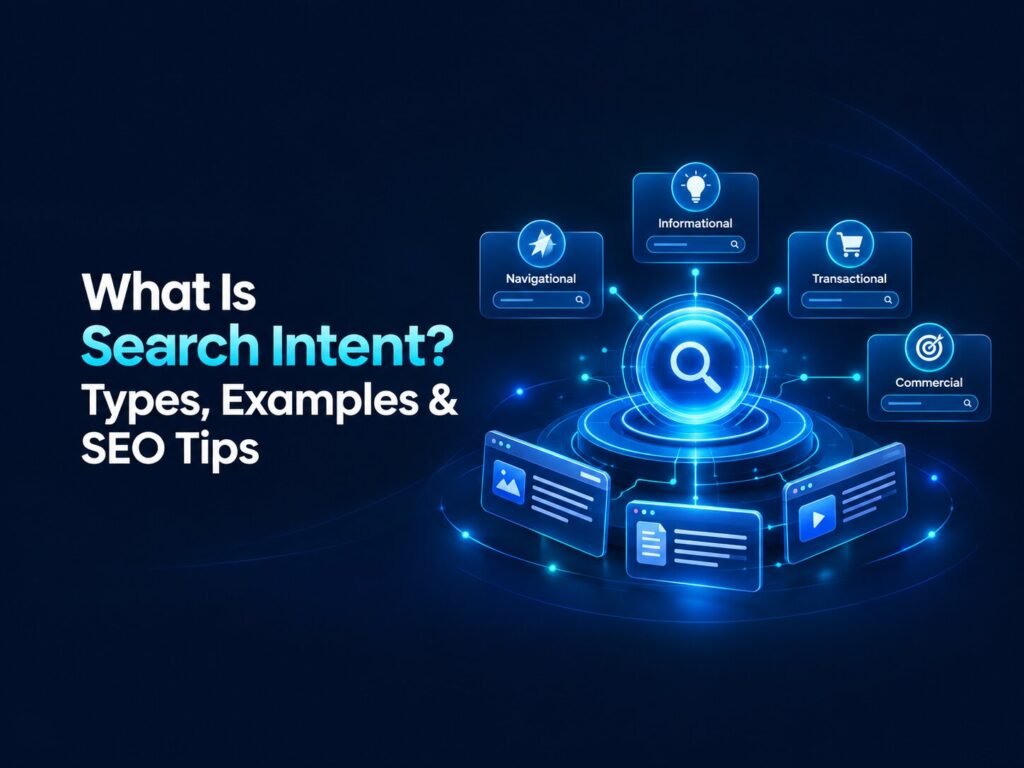
Have you ever typed something into Google and got exactly what you needed in the first result? That did not happen by luck. It happened because Google understood your search intent, the real reason behind your search.
If you run a website, write blogs, or manage SEO for a business, understanding search intent is one of the most important things you can learn. It is the difference between content that ranks and gets ignored, and content that ranks and actually brings customers.
In this guide, we will explain everything about search intent in a simple way. We will cover what search intent is, the main types of search intent, real search intent examples, and easy tips to use it correctly. We will also explain why search intent matters for regular Google results, AI Overviews, and the new world of AI search (AEO, GEO, and AIO). By the end, you will understand this topic better than most guides out there, including the top ones ranking today.
At Perform X Engine, we help businesses build content and SEO strategies that match what real users are searching for. So let’s break this topic down step by step, in plain and simple language anyone can follow.
What Is Search Intent?
So, what is search intent exactly? In simple words, search intent is the reason behind a person’s search. It is the goal someone has in their mind when they type a query into Google, Bing, or even an AI chatbot.
Every time someone searches for something, they are trying to do one of these things:
- Learn something new
- Find a specific website
- Compare products or services before buying
- Buy something or take an action right away
Search intent is not about the exact words a person types. It is about what they actually want. For example, if someone searches “best pizza near me,” they are not looking for the history of pizza. They want a list of pizza places close to them, right now.
Google’s whole job is to understand this hidden meaning behind every search and show the most helpful result. That is why understanding what is search intent, and writing content that matches it, is so important for anyone doing SEO today.
Search Intent vs Keywords: What Is the Difference?
Keywords are the actual words people type into the search box. Search intent is the reason behind those words. A keyword tells you what someone searched. Search intent tells you why they searched it.
For example, “running shoes” is a keyword. But the intent behind it could be different for different people. One person might want to learn about running shoes, another might want to compare brands, and another might be ready to buy a pair right now. This is why just targeting a keyword is not enough. You also need to match the intent behind it.
Why Google Search Intent Matters So Much
Google has spent years improving how it understands human language. Early search engines only matched keywords. If your page had the same words as the search query, you had a good chance of ranking, even if your content was not actually helpful.
That does not work anymore. Today, Google search intent is at the center of how rankings work. Google’s own Search Quality Evaluator Guidelines talk about understanding what a searcher wants before showing results. Google groups user goals into simple categories like “know,” “do,” “website,” and “visit in person.” This matches closely with how SEO experts describe search intent too.
Here is a simple way to understand it. Google does not just want to show pages with matching words. Google wants to show the page that best solves the user’s problem. If your content does not match what the searcher actually wants, it will not rank well, no matter how many keywords you add.
This is also true for voice search, AI Overviews, and chatbots like ChatGPT or Gemini. All of these tools are trying to figure out the same thing: what does this person really want?
The Importance of Search Intent for SEO
Let’s talk clearly about the importance of search intent for SEO, because this is where many businesses lose traffic without even knowing why.
Here is why search intent matters so much for your SEO success:
1. It helps you rank higher. Google rewards pages that match what users actually want. If your content matches the intent, Google is more likely to show it near the top.
2. It reduces bounce rate. If someone lands on your page and it is not what they wanted, they leave immediately. This tells Google your page is not a good match, which can hurt your rankings over time.
3. It increases conversions. When your content matches the intent behind a search, visitors are more likely to trust you, read more, and take action, like buying a product or filling out a form.
4. It saves your marketing budget. Instead of creating random content and hoping it works, understanding search intent helps you create the right content for the right stage of the customer journey. This means less wasted effort and better results.
5. It builds long term trust. Websites that consistently deliver what users expect become trusted sources. Over time, this builds authority, which helps every other page on your site too.
In short, the importance of search intent for SEO cannot be ignored. It affects your rankings, your traffic quality, and your business results all at once. This is exactly the kind of strategic thinking our team at PerformXEngine builds into every digital marketing campaign we manage.
Types of Search Intent (With Simple Examples)
Now let’s get into the main part of this guide: the different types of search intent. Most SEO experts agree there are four main types of search intent, plus a fifth one called mixed intent that is becoming more common.
Understanding these types of search intent will help you plan smarter content, whether you are writing blogs, product pages, or landing pages.
1. Informational Intent
This is the most common type of search intent. People with informational intent want to learn something. They are not ready to buy yet. They just want an answer or an explanation.
Search intent examples for informational searches:
- What is search intent
- How does SEO work
- Best exercises for back pain
- Why is the sky blue
- How to bake banana bread
These searches usually start with words like “what,” “how,” “why,” or “guide.” If you are targeting informational intent, your content should be a blog post, guide, or FAQ page. Explain things clearly, use simple language, and answer the question completely so the reader does not need to go anywhere else.
2. Navigational Intent
Navigational intent happens when someone already knows where they want to go. They use Google like a shortcut instead of typing the full website address.
Search intent examples for navigational searches:
- Facebook login
- PerformXEngine website
- Gmail sign in
- Nike official store
If people are searching for your brand name, make sure your homepage and important pages are easy to find and load quickly. Ranking for navigational searches for your own brand is important because it protects your reputation and keeps competitors from stealing your traffic.
3. Commercial Intent
Commercial intent, also called commercial investigation, sits between learning and buying. These users are comparing their options. They are interested but not fully decided yet.
Search intent examples for commercial searches:
- Best digital marketing agency
- Top SEO tools compared
- iPhone vs Samsung review
- Affordable web hosting services
Words like “best,” “top,” “review,” “vs,” and “compare” usually signal commercial intent. If you want to capture this audience, create comparison articles, case studies, reviews, and “best of” lists. This is your chance to build trust before someone makes a final decision.
4. Transactional Intent
Transactional intent is when a person is ready to take action right now. This is the closest intent to an actual sale or conversion.
Search intent examples for transactional searches:
- Buy running shoes online
- Hire SEO agency near me
- Sign up for email marketing tool
- Order pizza delivery
These searches often include words like “buy,” “order,” “hire,” “sign up,” or “discount.” Content for transactional intent should be clear, fast, and simple. Product pages, service pages, and landing pages with a strong call to action work best here.
5. Mixed Search Intent
Not every search fits into just one box. Sometimes a single search shows mixed search intent, meaning the person could want information and also be close to making a purchase.
Search intent examples for mixed intent:
- Best laptops for students under budget
- Running shoes for beginners
- Digital marketing services for small business
For searches like these, Google often shows a mix of blog articles, comparison pages, and product listings on the same results page. If you spot mixed intent, the smart move is to create content that answers the question and also gently guides the reader toward the next step, like a related product or service.
Quick Comparison Table of Search Intent Types
| Type of Search Intent | What the User Wants | Best Content to Create | Example Search |
| Informational | Learn something | Blog posts, guides, FAQs | What is search intent |
| Navigational | Reach a specific site | Homepage, brand pages | PerformXEngine website |
| Commercial | Compare before buying | Reviews, comparisons | Best SEO agency |
| Transactional | Take action now | Product or service pages | Hire digital marketing agency |
| Mixed | Learn and maybe buy | Guides with product links | Running shoes for beginners |
How to Find Search Intent for Any Keyword
Now that you understand the types of search intent, here is how you can actually find the intent behind any keyword, step by step.
Step 1: Search the keyword yourself.
Type it into Google and look at the top ten results. Are they blog posts, product pages, or comparison articles? This tells you what Google believes the intent is.
Step 2: Look at the words in the query.
Words like “how” or “what” usually mean informational intent. Words like “buy” or “price” usually mean transactional intent. Words like “best” or “review” usually mean commercial intent.
Step 3: Check the SERP features.
If you see featured snippets, People Also Ask boxes, or how-to sections, the intent is likely informational. If you see shopping ads or product carousels, the intent is likely transactional.
Step 4: Use an SEO tool.
Many keyword research tools now label intent automatically, so you don’t have to guess every time.
Step 5: Study your own audience.
Look at what your website visitors search for, what pages they land on, and what questions your customers ask. Real user behavior is one of the best signals for understanding intent.
Search Intent in the Age of AI Search (AEO, GEO and AIO)
Search intent is not just about ranking on Google anymore. Today, people also get answers from AI tools like ChatGPT, Gemini, Perplexity, and Google’s AI Overviews. This has created new terms like AEO (Answer Engine Optimization), GEO (Generative Engine Optimization), and AIO (AI Optimization).
The good news is that all of these are built on the same foundation: understanding search intent. AI models try to understand what a person truly wants, just like Google does, but they often summarize the answer directly instead of just showing links.
Here is how you can optimize your content so it performs well in Google search, AI Overviews, and AI chatbots at the same time:
- Answer the main question clearly in the first few lines, so both humans and AI can quickly understand your point
- Use clear headings that match how people actually search, including question based headings
- Break information into short paragraphs, bullet points, and simple tables, since AI tools prefer content that is easy to extract
- Cover the full topic in depth, not just the surface level answer, since AI systems reward complete and trustworthy content
- Use simple, everyday language instead of complicated jargon, since both readers and AI models understand plain language better
When you build content this way, you are not just optimizing for Google search intent. You are optimizing for the full modern search experience, including voice assistants, AI chat tools, and search engines all at once. This is exactly the kind of future-ready strategy PerformXEngine focuses on when building content and SEO plans for our clients.
Common Mistakes People Make With Search Intent
Even experienced marketers get search intent wrong sometimes. Here are common mistakes to avoid:
- Ignoring intent completely and only focusing on keyword volume, without checking what type of content actually ranks
- Mismatching content format, like writing a blog post for a keyword where Google clearly wants product pages
- Overselling on informational pages, which frustrates readers who just wanted an answer, not a sales pitch
- Not updating old content as search intent for a keyword can shift over time as user behavior changes
- Forgetting mobile and voice users, who often search with longer, more natural questions
Avoiding these mistakes alone can improve your rankings and user experience significantly.
Why This Matters for Your Business
If you are running a website or a business online, understanding search intent, google search intent, and the different types of search intent is not just a technical SEO detail. It is a core part of your marketing strategy.
When your content matches what your audience is actually searching for, you get more qualified traffic, better engagement, higher conversions, and stronger long term rankings. This is the foundation of good SEO, and it is something every business, big or small, should take seriously.
Final Thoughts
Understanding search intent is one of the smartest things you can do for your website and your business. Once you know what is search intent, the different types of search intent, and how to match your content to it, you can create pages that genuinely help people and perform well in search results.
Whether you are writing blog posts, building product pages, or planning a full content strategy, always ask yourself one simple question before you start: what does this person really want when they search this? Answer that honestly, and your SEO results will improve naturally over time.
If you want expert help building an SEO and content strategy centered around real search intent, the team at Perform X Engine is here to help your business grow with strategies that actually work.
Frequently Asked Questions About Search Intent
What is search intent in simple words?
Search intent is the real reason or goal behind a person’s search. It explains what the searcher actually wants to find, learn, or do.
What are the main types of search intent?
The four main types of search intent are informational, navigational, commercial, and transactional. Many experts also include a fifth category called mixed intent.
Why is search intent important for SEO?
Search intent is important for SEO because Google ranks content based on how well it matches what searchers actually want. Content that matches intent gets better rankings, more traffic, and higher conversions.
How do I find the search intent of a keyword?
You can find search intent by searching the keyword on Google, studying the top results, checking the words used in the query, and using SEO tools that label intent automatically.
Does search intent affect AI search results too?
Yes. AI Overviews and AI chatbots also try to understand search intent before generating an answer, so content built around clear intent performs better across both traditional search and AI search.