
If you have ever worked on an SEO project where two pages on the same website were accidentally competing against each other for the same keyword, you already understand why keyword mapping matters. It is one of those foundational SEO tasks that quietly prevents a huge amount of wasted effort and confused rankings down the line.
At PerformX Engine, keyword mapping is one of the very first steps we complete before writing a single piece of content for a client’s website. In this guide, we will explain exactly what keyword mapping is, why it is such a critical part of any serious SEO strategy, and walk through a clear, practical process for how to do keyword mapping the right way. Whether you are an SEO specialist, a content strategist, or a digital marketer managing your own site, this guide will give you a repeatable system you can apply immediately.
What Is Keyword Mapping?
Let’s start with a clear definition.
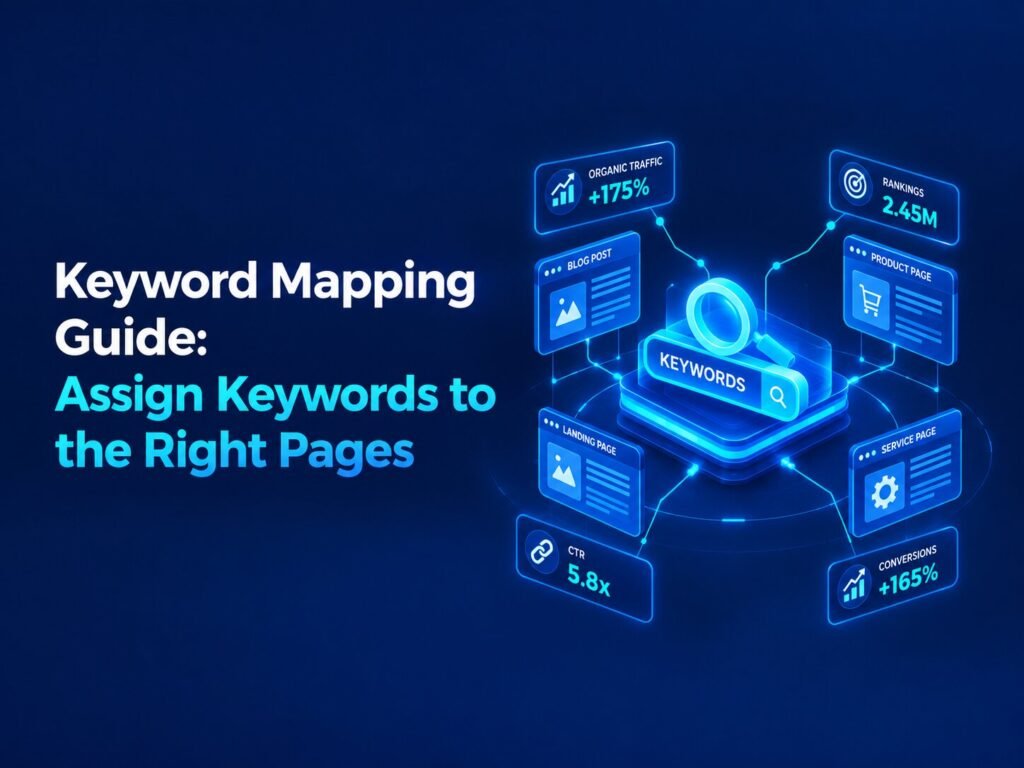
Keyword mapping is the process of assigning specific target keywords to specific pages on your website, based on relevance and search intent. Instead of randomly scattering keywords across your site or letting multiple pages compete for the same terms, keyword mapping creates a clear, organized plan showing exactly which page should rank for which keyword.
In simple words, if someone asks what is keyword mapping, the answer is this: it is the process of matching your keyword research to your actual website structure, so every important page has a clear, focused purpose in your overall SEO strategy.
This might sound like a simple spreadsheet exercise, and in some ways it is, but the strategic thinking behind it is what separates a website with strong, well organized rankings from one that struggles with confused, overlapping pages competing against themselves.
Why Keyword Mapping in SEO Is So Important
Understanding keyword mapping in SEO is essential because search engines can only rank one page at a time for a given search result, in most cases. When two or more pages on the same site target the exact same keyword, they end up competing against each other rather than against outside competitors. This problem is known as keyword cannibalization, and it is one of the most common and avoidable SEO mistakes.
Here are the core reasons keyword mapping matters so much:
- It prevents keyword cannibalization, where multiple pages compete against each other instead of external competitors.
- It clarifies your content strategy, showing exactly which topics still need dedicated pages or blog posts.
- It strengthens your site’s overall structure, making it easier for both users and search engines to understand how your pages relate to each other.
- It improves internal linking decisions, since you know exactly which page should be the primary destination for a given topic.
- It supports better content briefs, giving writers and content teams a clear, focused target for every piece of content they create.
Keyword Mapping vs Keyword Research: What Is the Difference?
Before going further, it helps to clarify the difference between these two closely related but distinct SEO tasks.
Keyword research is the process of discovering which keywords your audience actually searches for, along with data like search volume, competition, and intent. Keywords mapping takes that research one step further, by assigning each researched keyword to a specific page or planned piece of content on your website.
In short, keyword research answers “what should we target?” while keyword mapping answers “where should we target it?” Both steps are essential, and skipping the mapping step often leads to disorganized content strategies, even when the underlying keyword research was solid.
How to Do Keyword Mapping: A Step-by-Step Process
Now let’s walk through exactly how to do keyword mapping, step by step, in a way that works for websites of any size.
Step 1: Complete Thorough Keyword Research
Before you can map anything, you need a solid list of relevant keywords for your business. Gather keywords along with their search volume, keyword difficulty, and search intent, since all three factors will influence how you group and assign them later.
Step 2: Audit Your Existing Website Pages
List every important page currently on your website, along with any keywords it already ranks for or appears to be targeting. This audit step often reveals existing cannibalization issues or content gaps you were not previously aware of.
Step 3: Group Keywords by Search Intent and Topic
Organize your keyword list into clusters based on shared intent and topic similarity. Keywords with very similar intent, like “affordable seo services” and “cheap seo agency,” usually belong on the same page, while keywords with different intent, like “what is seo” versus “hire an seo agency,” typically belong on separate pages.
Step 4: Assign a Primary Keyword to Each Page
For every page, whether existing or planned, assign one clear primary keyword that best represents its main topic and intent. This primary keyword should guide the page’s title tag, H1 heading, and overall content focus.
Step 5: Assign Supporting Secondary Keywords
Alongside the primary keyword, assign a handful of closely related secondary keywords to each page. These support the main topic without competing directly against it, and they help the page rank for a broader range of related searches.
Step 6: Identify Content Gaps
As you work through this process, you will likely notice keywords that do not fit naturally onto any existing page. These represent opportunities for new content, whether that means new blog posts, service pages, or resource guides.
Step 7: Resolve Any Keyword Cannibalization
If your audit reveals multiple pages targeting the same primary keyword, decide which page should be the primary target going forward. From there, you can either consolidate the content into one strong page, update the other page’s focus to a different keyword, or redirect the weaker page if it no longer serves a distinct purpose.
Step 8: Document Everything in a Keyword Map
Create a clear, organized document, usually a spreadsheet, listing every page on your site alongside its assigned primary keyword, secondary keywords, search intent, and current status. This becomes your central reference point for ongoing content planning and optimization.
Building a Practical Keyword Mapping Template
A simple, effective keyword map usually includes these columns:
| Page URL | Primary Keyword | Secondary Keywords | Search Intent | Content Status | Notes |
| /services/seo | seo services | seo agency, seo company | Commercial | Live | Needs updated case studies |
| /blog/what-is-seo | what is seo | seo meaning, seo basics | Informational | Live | Ranking well |
| /blog/keyword-mapping-guide | seo keyword mapping | keyword mapping in seo | Informational | Planned | New content needed |
This kind of structured keyword mapping document keeps your entire SEO team, or yourself, aligned on exactly which page owns which keyword, preventing overlap and confusion as your website continues to grow.
Mapping Keywords to Search Intent and the Buyer Journey
An important part of effective keyword mapping in SEO involves aligning each keyword with the appropriate stage of the buyer journey.
Informational Intent
These keywords reflect someone early in their research process, looking to learn or understand something. Blog posts, guides, and educational content usually serve this intent best.
Commercial Investigation Intent
These keywords reflect someone comparing options or researching solutions before making a decision. Comparison pages, case studies, and detailed service explanations often serve this intent well.
Transactional Intent
These keywords reflect someone ready to take action, like making a purchase or hiring a service. Service pages, product pages, and clear calls to action are best suited for this stage.
Mapping your keywords not just to pages, but to the correct stage of intent, ensures your website has the right type of content available at every point in a potential customer’s journey.
Common Mistakes to Avoid in Keyword Mapping
- Assigning the same primary keyword to multiple pages. This directly causes keyword cannibalization and confuses search engines about which page to rank.
- Ignoring search intent when grouping keywords. Keywords with different underlying intent should rarely be forced onto the same page, even if they look similar on the surface.
- Treating keyword mapping as a one-time task. Websites grow and change over time, so your keyword map should be reviewed and updated regularly.
- Overloading a single page with too many unrelated keywords. This dilutes the page’s focus and makes it harder for search engines to understand its true purpose.
- Skipping the audit of existing content. Without reviewing what already exists, you risk creating duplicate content or missing valuable optimization opportunities on pages you already have.
How Keyword Mapping Supports Content Strategy and Internal Linking
Once your keyword map is complete, it becomes a powerful foundation for two other important SEO activities.
For content strategy, your keyword map clearly highlights which topics still need dedicated content, helping you prioritize your content calendar based on real gaps rather than guesswork.
For internal linking, knowing exactly which page owns which keyword makes it much easier to decide where internal links should point. Instead of linking randomly, you can confidently link relevant anchor text toward the specific page that is meant to rank for that particular keyword, reinforcing its authority and relevance in the eyes of search engines.
Why Keyword Mapping Matters for AI Search and AEO Too
As AI powered search features, like AI Overviews, become a bigger part of how people find information, having a clear, well organized keyword map becomes even more valuable. When each page has a clear, focused topic and answers a specific set of related questions thoroughly, it becomes much easier for AI systems to understand exactly what that page offers, and much more likely to be cited or summarized accurately. A messy site, where multiple pages loosely cover the same topic, makes it far harder for both traditional search engines and AI systems to know which page truly deserves to be featured.
Why Professional Support Makes a Real Difference
While the basic concept of keyword mapping is simple to understand, executing it properly across a large or complex website takes real strategic thinking, especially when resolving existing cannibalization issues or planning a large-scale content structure. This is exactly the kind of work our SEO team handles regularly at PerformX Engine.
We build detailed keyword maps for our clients based on thorough research, competitive analysis, and search intent, then use that map to guide content creation, internal linking, and ongoing optimization decisions across the entire website.
Final Thoughts
A well built keyword map brings order and clarity to your entire SEO strategy. By understanding what is keyword mapping and applying a structured process for how to do keyword mapping across your website, you can avoid wasted effort, prevent keyword cannibalization, and build a clearer, more effective content strategy overall.
At PerformX Engine, we help businesses build detailed, strategic keyword maps that guide stronger content creation, smarter internal linking, and better overall SEO performance. If you are ready to bring structure and clarity to your keyword strategy, our team is here to help.
Ready to build a keyword map that actually drives results? Reach out to PerformX Engine today and let’s organize your SEO strategy the right way.
Frequently Asked Questions About Keyword Mapping
What is keyword mapping in simple words?
Keyword mapping is the process of assigning specific keywords to specific pages on your website, based on relevance and search intent, so each page has a clear, focused SEO purpose.
How to do keyword mapping for a large website?
Start with thorough keyword research, audit your existing pages, group keywords by topic and intent, then assign a primary and a few secondary keywords to each page, documenting everything in an organized spreadsheet.
What is the difference between keyword research and keyword mapping?
Keyword research identifies which keywords to target, while keyword mapping decides exactly where, meaning on which specific page, those keywords should be targeted.
How often should I update my SEO keyword mapping?
It is a good idea to review and update your keyword map every few months, or whenever you add significant new content or notice ranking overlap between existing pages.
Can keyword mapping help fix keyword cannibalization?
Yes, keyword mapping is one of the most effective ways to identify and resolve keyword cannibalization, since it clearly shows which pages are competing for the same target keywords.