
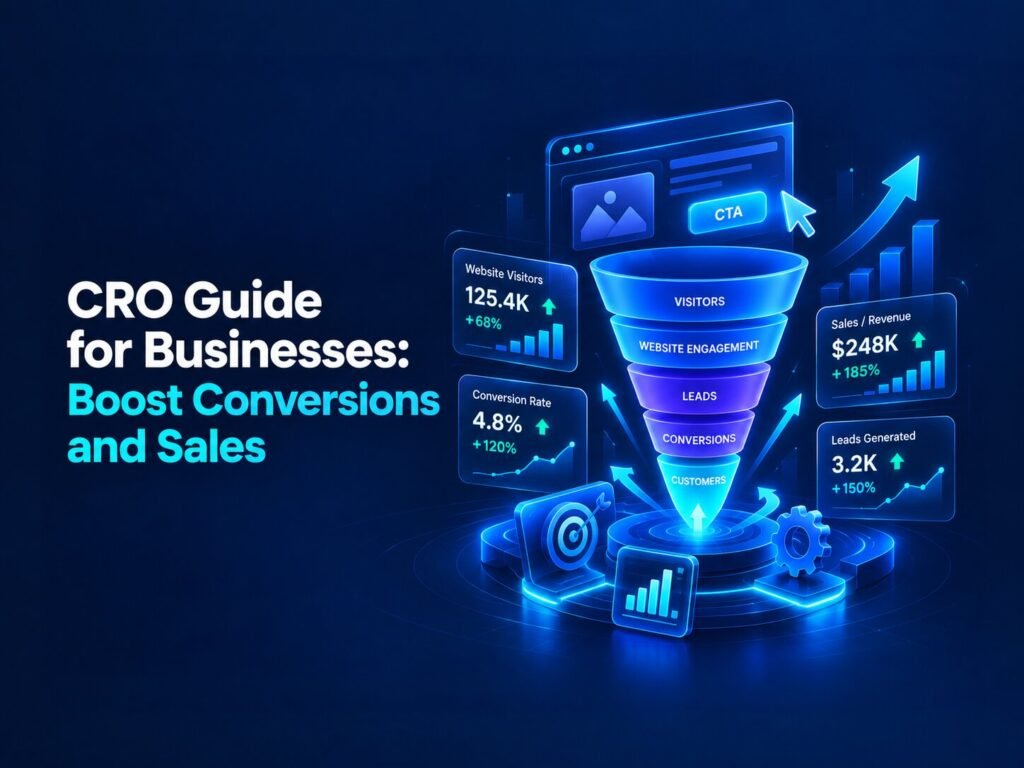
Imagine your website gets a thousand visitors this month, but only ten of them actually buy something, fill out a form, or call your business. Where did the other 990 people go? Most of them were probably interested, but something on your website stopped them from taking that final step. This is exactly the problem that conversion rate optimization, often called CRO, is designed to solve.
At PerformX Engine, we talk to business owners every week who are spending real money on ads, SEO, and social media to bring visitors to their website, but they are not seeing the sales or leads they expected. Often, the traffic is not the problem. The website experience is. This complete cro guide will walk you through everything you need to know, in simple, clear language, so you can start turning more of your existing visitors into real customers.
By the end of this guide, you will fully understand what is conversion rate optimisation, why it matters so much for your business, and exactly how to start improving it, step by step.
What Is Conversion Rate Optimisation?
Let’s start with the basics.
Conversion rate optimisation is the process of improving your website, or specific pages on it, so that a higher percentage of your visitors take the action you want them to take. That action, called a conversion, could be many things depending on your business, like making a purchase, filling out a contact form, booking an appointment, signing up for a newsletter, or calling your business directly.
In the simplest possible words, if someone asks what is conversion rate optimisation, the answer is this: it is the practice of turning more of your existing website visitors into real customers or leads, without needing to spend more money bringing in additional traffic.
This is one of the most valuable parts of digital marketing, because most businesses spend a lot of time and money trying to get more visitors, while completely ignoring the fact that a large percentage of the visitors they already have are simply leaving without taking any action at all.
Why Conversion Rate Optimization Matters So Much for Your Business
Here is a simple way to think about it. If your website currently converts 2 percent of its visitors into customers, and you improve that to 4 percent through smart conversion rate optimization, you have literally doubled your results without spending a single extra rupee or dollar on additional traffic.
This is exactly why a solid conversion rate optimization guide should be a priority for every business with a website, whether you are just starting out or already running a mature, established company. A few key reasons CRO matters so much include:
- It makes your existing marketing spend work harder. Every visitor becomes more valuable when more of them convert.
- It often costs less than acquiring new traffic. Improving your website is usually more affordable than continuously increasing your ad budget.
- It improves the overall customer experience. Many CRO improvements also make your website easier and more pleasant to use.
- It compounds over time. Small improvements across multiple pages can add up to a significant overall increase in sales or leads.
How to Calculate Your Conversion Rate
Before you can improve anything, you need to know where you currently stand. Your conversion rate is calculated using a simple formula:
Conversion Rate = (Number of Conversions ÷ Number of Total Visitors) x 100
For example, if your website had 5,000 visitors last month, and 100 of them made a purchase, your conversion rate would be 2 percent. This number becomes your starting point, and tracking it over time helps you clearly see whether your CRO efforts are actually working.
The Core Elements of a Strong CRO Strategy
A well-rounded conversion rate optimization guide should cover more than just changing button colors. Let’s break down the real elements that influence whether someone converts on your website.
1. Clarity of Your Message
Visitors should understand what you offer, who it is for, and why it matters within just a few seconds of landing on your page. Confusing, vague, or overly clever messaging often causes visitors to leave before they even understand what you are selling.
2. Trust and Credibility
People do not buy from businesses they do not trust. Elements like customer reviews, testimonials, trust badges, clear contact information, and professional design all help build the confidence a visitor needs before taking action.
3. Page Load Speed
A slow-loading website frustrates visitors and often causes them to leave before the page even fully loads. Even small improvements to load speed can lead to noticeably higher conversion rates.
4. Mobile Experience
With most website traffic now coming from mobile devices, a page that is difficult to use on a phone will almost certainly lose potential customers, no matter how strong the offer is.
5. Clear Calls to Action
Every important page should have an obvious, easy to find call to action, like “Buy Now,” “Get a Free Quote,” or “Book a Call.” If visitors have to search for what to do next, many of them simply will not bother.
6. Friction in the Process
Every extra step, unnecessary form field, or confusing choice adds friction that can cause a visitor to abandon the process. Reducing friction, especially in forms and checkout processes, is one of the most effective conversion rate optimization strategies available.
A Step-by-Step CRO Guide for Business Owners
Now let’s walk through exactly how to start improving your website’s conversion rate, one step at a time.
Step 1: Identify Your Most Important Pages
Start with the pages that matter most to your business goals, like your homepage, product pages, service pages, or checkout process. These are the pages where small improvements can have the biggest overall impact.
Step 2: Understand How Visitors Actually Behave
Use tools like heatmaps, session recordings, and analytics platforms to see exactly how people interact with your pages. This helps you spot where visitors get confused, where they click, and where they tend to leave without converting.
Step 3: Identify Points of Friction
Look closely for anything that might be slowing visitors down or creating hesitation, like unclear pricing, confusing navigation, long forms, or slow loading pages.
Step 4: Form a Clear Hypothesis
Instead of guessing randomly, form a specific hypothesis based on what you observe. For example, “If we simplify our contact form from eight fields to four, more visitors will complete it.”
Step 5: Test Your Changes
Whenever possible, use A/B testing, showing two versions of a page to different visitors, to measure which version actually performs better with real data, rather than relying on personal opinion alone.
Step 6: Measure Results Honestly
Give your test enough time to gather meaningful data before drawing conclusions. Small sample sizes or short testing periods can lead to misleading results.
Step 7: Apply What Works and Keep Testing
Once you find an improvement that genuinely increases conversions, apply it permanently, then move on to testing the next opportunity. Conversion rate optimization is never a one-time project. It is an ongoing, continuous process.
Common CRO Mistakes Business Owners Make
- Making changes based on personal preference instead of data. What you personally like about your website does not always match what actually converts visitors.
- Testing too many changes at once. Changing multiple elements at the same time makes it impossible to know which change actually caused the improvement.
- Ignoring mobile users. Focusing only on the desktop experience while ignoring mobile visitors leaves a huge portion of potential conversions on the table.
- Giving up too early. Meaningful CRO results often take consistent effort and multiple rounds of testing, not just one quick fix.
- Focusing only on the homepage. Important conversion opportunities often exist on product pages, service pages, and checkout flows too, not just your homepage.
CRO for Different Types of Businesses
While the core principles of conversion rate optimization apply broadly, the specific focus can vary depending on your business type.
Ecommerce Businesses
For online stores, CRO often focuses on product page clarity, simplifying the checkout process, reducing cart abandonment, and building trust through reviews and clear return policies.
Service-Based Businesses
For businesses offering services, like consulting, legal, or home services, CRO often focuses on making it easy to request a quote, book a consultation, or contact the business directly, along with building strong trust signals throughout the site.
Lead Generation Businesses
For businesses focused on collecting leads, CRO often centers around simplifying forms, clarifying the value of what visitors will receive, and reducing any hesitation before someone submits their information.
How CRO Connects to Your Overall Marketing Strategy
It is important to understand that conversion rate optimization does not replace the need for good traffic sources, like SEO or paid advertising. Instead, it works alongside them. Bringing in more visitors without improving your conversion rate is like pouring water into a leaking bucket. CRO helps fix those leaks, so every marketing dollar you spend on bringing in traffic has a better chance of actually turning into real business results.
Why Professional CRO Support Makes a Real Difference
While the basics of conversion rate optimization are simple to understand, building a genuinely effective CRO strategy takes ongoing research, testing, and analysis. This is exactly the kind of work our team focuses on every day at PerformXEngine.
We help businesses understand exactly where visitors are dropping off, form clear, data-backed hypotheses, and run structured tests to genuinely improve conversion rates over time. Our approach is never based on guesswork or personal opinion. It is based on real visitor behavior and measurable results.
Tools That Support a CRO Guide Strategy
Once you understand the process, having the right tools makes it far easier to actually put a conversion rate optimization guide into practice. Here are a few categories worth knowing about.
Analytics Tools
Analytics platforms help you understand basic visitor behavior, like which pages get the most traffic, how long people stay, and where they tend to leave your site. This data gives you the starting point for deciding which pages need attention first.
Heatmap and Session Recording Tools
These tools show you visually where people click, how far they scroll, and how they actually move through your pages. Watching real session recordings often reveals confusing design choices or overlooked friction points that raw numbers alone cannot show you.
A/B Testing Tools
Dedicated testing platforms let you run controlled experiments, showing different versions of a page to different visitors and measuring which one performs better. This removes guesswork from the CRO process and replaces it with real evidence.
Form Analytics Tools
For businesses that rely heavily on lead forms, form analytics tools show exactly where people hesitate or abandon a form, which fields cause the most drop-off, and how long the form takes to complete on average.
You do not need every single tool at once. Most businesses start with basic analytics and gradually add heatmaps or testing tools as their CRO efforts mature.
Final Thoughts
Understanding what is conversion rate optimisation and applying it consistently can genuinely transform how much value your business gets from the traffic it already has. Instead of constantly chasing more visitors, this conversion rate optimization guide shows you how to turn more of your existing audience into real customers, through clear messaging, reduced friction, and consistent, data-driven testing.
At PerformX Engine, we help businesses build and run effective CRO strategies that turn more visitors into real, measurable results. If you are ready to stop losing potential customers and start converting more of your existing traffic, our team is here to help.
Ready to boost your conversions and sales? Reach out to PerformXEngine today and let’s build a smarter conversion rate optimization strategy for your business.
Frequently Asked Questions About CRO for Businesses
What is conversion rate optimisation in simple words?
Conversion rate optimisation is the process of improving your website so that a higher percentage of visitors take a desired action, like making a purchase or filling out a form, without needing more traffic.
How long does it take to see results from a CRO guide strategy?
Results vary depending on your website’s traffic volume and the size of the changes made, but many businesses start seeing measurable improvements within a few weeks to a few months of consistent testing.
Do I need a large amount of traffic to start doing CRO?
While more traffic makes A/B testing faster, businesses with smaller traffic volumes can still benefit from CRO by focusing on qualitative research, like heatmaps and visitor feedback, alongside slower but still meaningful testing.
What is a good conversion rate for a website?
Average conversion rates vary widely by industry, so it is usually more useful to focus on improving your own website’s rate over time rather than comparing it to a general industry benchmark.
Is CRO a one-time project or an ongoing process?
Conversion rate optimization works best as an ongoing process. Visitor behavior, competition, and expectations change over time, so continuous testing and improvement tend to produce the strongest long-term results.