
If you are learning about SEO, you have probably come across two terms again and again: long-tail keywords and short-tail keywords. They sound simple, but many beginners get confused about which one to use, when to use it, and why it even matters.
At PerformX Engine, keyword strategy is one of the first things we work on with every client, because picking the right keywords can be the difference between a website that gets ignored and a website that gets real visitors, real leads, and real sales. In this guide, we will explain long tail vs short tail keywords in simple, clear words. We will cover what is long tail and short tail keywords, how they are different, and how to actually use both of them the right way in your SEO strategy.
By the end of this blog, you will fully understand the difference between long tail and short tail keywords in SEO, and you will know exactly how to use each one to grow your website.
What Is Long Tail and Short Tail Keywords?
Let’s start with the basics.
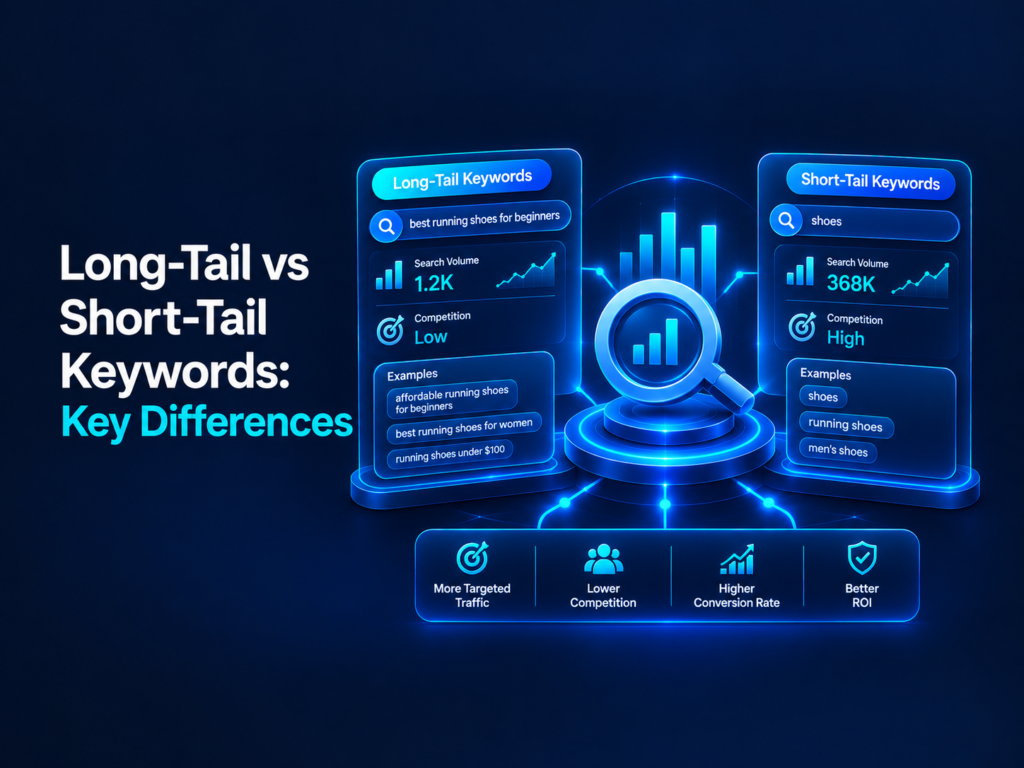
A short-tail keyword is a search term that is short, usually just one, two, or three words. It is broad, general, and searched by a huge number of people every single day. Examples include words like “shoes,” “digital marketing,” or “coffee shop.”
A long-tail keyword is a search term that is longer and much more specific, usually made up of four or more words. Instead of being broad, it describes exactly what the person is looking for. Examples include phrases like “best running shoes for flat feet” or “affordable digital marketing agency for small business in Ahmedabad.”
So when people ask what is long tail and short tail keywords, the simplest answer is this: short-tail keywords are short and general, while long-tail keywords are long and specific. Both play an important role in SEO, but they work in very different ways, and understanding that difference is the key to building a smart keyword strategy.
Why This Topic Matters So Much in SEO
Every single day, millions of people type words and phrases into Google to search for something. Some searches are broad and vague. Some searches are extremely detailed. Understanding long tail keywords and short tail keywords helps you figure out exactly who you are trying to reach and what stage of their buying journey they are in.
If you only chase short, broad keywords, you may get a lot of traffic, but many of those visitors might not actually be looking for what you offer. If you only chase long, specific keywords, you may get fewer visitors overall, but the ones who arrive are often much closer to actually becoming a customer.
This is exactly why smart SEO strategies almost always use a mix of both.
Short-Tail Keywords Explained
Let’s go a little deeper into short-tail keywords first.
Short-tail keywords, sometimes also called “head terms,” are usually just one to three words long. They are broad by nature, which means they can mean many different things to many different people.
For example, if someone searches “marketing,” they could be looking for:
- A definition of marketing
- Marketing courses
- Marketing agencies
- Marketing jobs
- Marketing books
Because the search is so broad, Google has a hard time knowing exactly what that person really wants, which makes short-tail keywords tricky to rank for and even trickier to convert into real customers.
Characteristics of Short-Tail Keywords
- Usually one to three words long
- Very high search volume
- Very high competition
- Broad and unclear search intent
- Often used at the very beginning of a customer’s research
Pros of Short-Tail Keywords
- They can bring a large volume of traffic to your website
- They help build general brand visibility and awareness
- They are useful for broad topic pages or category pages
Cons of Short-Tail Keywords
- Extremely competitive, which makes ranking very difficult, especially for new websites
- Search intent is unclear, so a lot of the traffic may not convert into leads or sales
- Usually requires a much bigger SEO or paid advertising budget to compete for these terms
Long-Tail Keywords Explained
Now let’s look closely at long-tail keywords.
Long-tail keywords are longer, more detailed search phrases, usually four words or more. Because they are so specific, they tell you exactly what the searcher wants, which makes them incredibly valuable for both SEO and conversions.
For example, instead of searching “shoes,” someone might search “best waterproof hiking shoes for men under $100.” This person clearly knows what they want, and a business that shows up for this exact search has a much higher chance of turning that visitor into a customer.
Characteristics of Long-Tail Keywords
- Usually four or more words long
- Lower search volume per keyword
- Lower competition, which makes ranking easier
- Very clear and specific search intent
- Often used later in the customer’s research or buying journey
Pros of Long-Tail Keywords
- Easier to rank for, especially for newer or smaller websites
- Much higher conversion rates because the intent is so clear
- Often cheaper to target in paid advertising campaigns
- Great for content marketing, blogs, and voice search
Cons of Long-Tail Keywords
- Each individual keyword brings less traffic on its own
- You often need many long-tail keywords and pages to see a big overall impact
- Requires more detailed content creation and keyword research
Long Tail Keywords vs Short Tail Keywords: A Simple Comparison Table
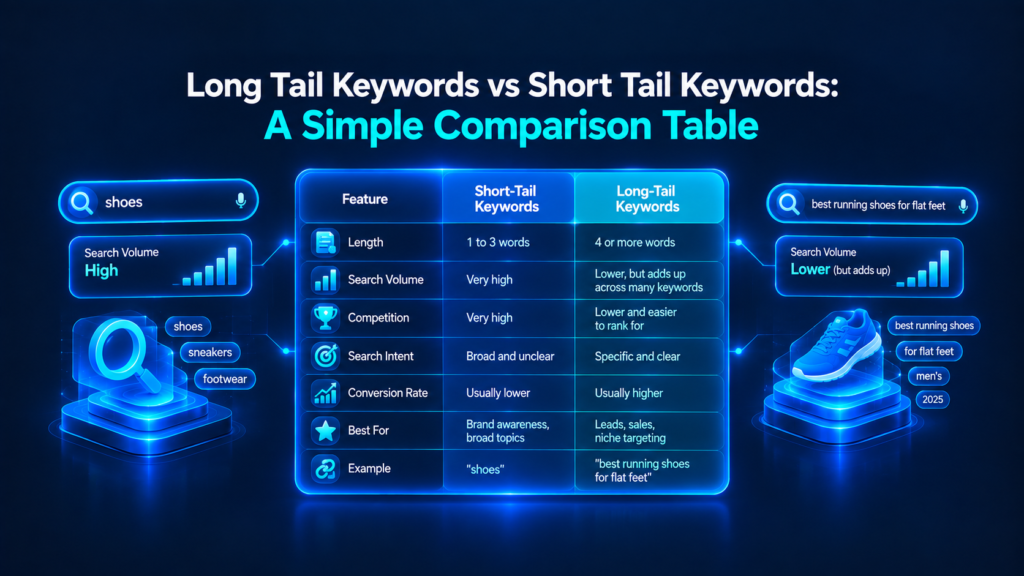
Here is a simple side-by-side comparison to make everything crystal clear.
| Feature | Short-Tail Keywords | Long-Tail Keywords |
| Length | 1 to 3 words | 4 or more words |
| Search Volume | Very high | Lower, but adds up across many keywords |
| Competition | Very high | Lower and easier to rank for |
| Search Intent | Broad and unclear | Specific and clear |
| Conversion Rate | Usually lower | Usually higher |
| Best For | Brand awareness, broad topics | Leads, sales, niche targeting |
| Example | “shoes” | “best running shoes for flat feet” |
This table shows the core difference between long tail and short tail keywords in SEO in one simple glance. Short-tail keywords bring volume. Long-tail keywords bring precision.
The Real Difference Between Long Tail and Short Tail Keywords in SEO
While the word count is the most obvious difference, there are actually several layers to this comparison that go much deeper than just length.
1. Search Intent
Short-tail keywords usually have mixed or unclear intent because so many different types of people search the same broad term. Long-tail keywords almost always have clear intent because the extra words narrow down exactly what the searcher wants.
2. Competition Level
Because short-tail keywords are searched so often, big established websites and big brands usually dominate those results. Long-tail keywords, on the other hand, are less competitive, which gives smaller businesses and newer websites a real chance to rank on the first page of Google.
3. Conversion Potential
Long tail keywords vs short tail keywords also differ heavily in conversion rates. A visitor who searches a long, specific phrase already knows what they want, so they are much more likely to fill out a form, make a purchase, or contact your business. A visitor who searches a broad, short keyword may still be exploring and comparing, which usually means lower conversion rates.
4. Content Strategy
Short-tail keywords work well for homepage titles, category pages, or broad service pages. Long-tail keywords work best for blog posts, FAQ pages, and detailed content that answers a very specific question or need.
5. Cost in Paid Advertising
If you run Google Ads, short-tail keywords usually cost more per click because so many advertisers are competing for the same broad term. Long-tail keywords often cost less per click and tend to bring in more qualified leads, making them a smart choice for businesses with a limited advertising budget.
When Should You Use Short-Tail Keywords?
Short-tail keywords are useful in these situations:
- When you want to build broad brand awareness
- When you are targeting your main homepage or core service pages
- When your business already has strong domain authority and can compete for tough keywords
- When you want a large volume of general traffic, even if not every visitor converts
When Should You Use Long-Tail Keywords?
Long-tail keywords work best in these situations:
- When you are a newer website trying to rank without a huge SEO budget
- When you want visitors who are ready to take action, like buying or booking
- When you are creating blog content, guides, or answering specific customer questions
- When you want to target voice search, since people usually speak in longer, more natural phrases
How to Use Long Tail Keywords and Short Tail Keywords Together
Here is the truth that many beginners miss: this is not really a competition where one has to “win.” The smartest SEO strategies combine long tail keywords and short tail keywords together, using each one for the job it does best.
A simple way to think about it is like building a pyramid:
- Top of the pyramid: A few short-tail keywords on your homepage and main service pages to build broad visibility.
- Middle of the pyramid: Medium-length keywords on category or supporting pages.
- Bottom of the pyramid: Many long-tail keywords spread across blog posts, guides, and FAQ content to capture specific, high-intent searches.
This layered approach helps your website show up for a wide range of searches, from broad browsing to very specific, ready-to-buy searches, which is exactly the kind of strategy we build for our clients at PerformXEngine.
Common Mistakes Businesses Make With Keywords
- Only targeting short-tail keywords. This often leads to slow SEO growth because the competition is too tough for newer websites.
- Ignoring long-tail keywords completely. This means missing out on easier rankings and higher converting traffic.
- Not researching actual search intent. Choosing a keyword just because it has high search volume, without understanding what the searcher actually wants, often leads to poor results.
- Creating one page for too many keywords. This confuses search engines and weakens your ranking chances for all of them.
- Never updating keyword strategy. Search behavior changes over time, so a keyword strategy should be reviewed and updated regularly.
Why This Matters for AI Search and Voice Search Too
Search behavior is changing fast. More and more people are using voice assistants and AI powered search tools, and these searches tend to sound like long tail keywords. Instead of typing “digital marketing agency,” someone might ask their phone, “which digital marketing agency is best for a small business near me.” This shift makes understanding long tail keywords vs short tail keywords even more important going forward, not less.
Final Thoughts
Understanding long tail vs short tail keywords is one of the most important foundations of a successful SEO strategy. Short-tail keywords help you build visibility and reach a broad audience, while long-tail keywords help you attract visitors who are ready to take action. Neither one should be ignored, and the real skill lies in knowing how to balance both based on your business goals, your website’s current strength, and your budget.
At PerformX Engine, we help businesses build smart, well-researched keyword strategies that combine the right mix of long-tail and short-tail keywords to drive real, measurable growth. If you are ready to stop guessing and start ranking with the right keywords, our team is here to help.
Ready to build a keyword strategy that actually works? Reach out to PerformXEngine today and let’s grow your website’s search visibility the right way.
Frequently Asked Questions About Long Tail vs Short Tail Keywords
What is long tail and short tail keywords in simple words?
Short-tail keywords are short, broad search terms, usually one to three words. Long-tail keywords are longer, more specific search phrases, usually four words or more.
What is the main difference between long tail and short tail keywords in SEO?
The main difference is specificity. Short-tail keywords are broad and highly competitive, while long-tail keywords are specific, less competitive, and usually convert better.
Which is better for beginners, long-tail or short-tail keywords?
Long-tail keywords are usually better for beginners and new websites because they are easier to rank for and tend to bring in visitors who are closer to making a decision.
Can I use long tail keywords and short tail keywords together?
Yes, and you actually should. A strong SEO strategy usually combines both, using short-tail keywords for broad visibility and long-tail keywords for targeted, high-converting traffic.
Do long-tail keywords really convert better than short-tail keywords?
In most cases, yes. Because long-tail keywords reflect a very specific need, the person searching is usually further along in their decision-making process, which often leads to higher conversion rates.